2026 Best Exercise Equipment for Recovery?

Time:2026-10-07 Author:Aria
0%

Choosing the 2026 best exercise equipment for recovery requires more than following fitness trends. Effective tools should support comfort, mobility, circulation, and gradual return to training. They should not promise instant healing or replace professional medical care.

How exercise equipment aids recovery depends on the user, the injury, and the training load. A foam roller may reduce stiffness after a long run. A low-resistance exercise bike can encourage gentle movement without heavy joint impact. Massage guns, compression boots, stretching straps, and balance trainers may also help specific recovery routines. Results can vary.

Small details matter.

A reliable guide should compare pressure settings, noise, durability, cleaning, battery life, and ease of use. It should also explain when a device may be unsuitable. For example, people with circulation problems, recent surgery, unexplained swelling, or severe pain should seek qualified medical advice before using compression or percussion equipment. Manufacturer instructions matter, but independent clinical guidance matters more.

The most useful equipment is often the tool someone can use safely and consistently. A premium device left in a cupboard offers little value. Conversely, a simple mat and resistance band may support daily mobility when used correctly. That point is easy to overlook. Popular equipment is not automatically effective, and even good tools can be misused. This review considers practical evidence, expert recommendations, user comfort, and long-term value. It also acknowledges uncertainty, because recovery is personal, uneven, and sometimes slower than expected.
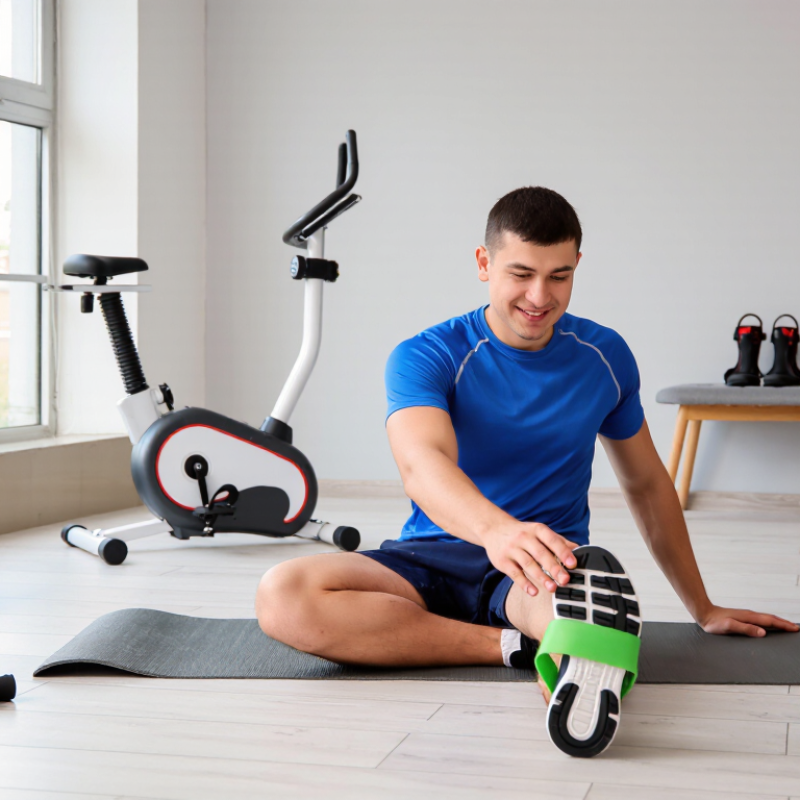
2026 Best Exercise Equipment for Recovery?

What Recovery Exercise Equipment Is and How It Supports Healing

2026 Best Exercise Equipment for Recovery?

Recovery exercise equipment supports healing by restoring gentle movement, circulation, strength, and confidence. It does not replace diagnosis or supervised rehabilitation. The right tool depends on the injury, healing stage, and movement tolerance.

A foam roller can reduce temporary muscle tightness after activity. Move slowly, and avoid pressing directly on swollen areas or healing wounds.

A stationary bike provides low-impact motion for knees, hips, and ankles. Keep resistance light enough for smooth pedaling.

Resistance bands help rebuild strength with controlled tension. Begin with short sets, especially after surgery or prolonged rest. Less can be better.

Balance pads and stability platforms challenge coordination during later rehabilitation. Use a wall or stable chair nearby.

A massage device may feel soothing, but excessive pressure can worsen bruising or irritation. That warning matters. Many people mistake discomfort for progress.

Sharp pain, increasing swelling, numbness, unusual weakness, or fever requires medical advice. Equipment should support a treatment plan, not create a new injury.

Reliable recovery work also includes rest, hydration, sleep, and gradual progression.

A physiotherapist can adjust range, resistance, and frequency based on measurable changes.

Track pain during exercise and again the next morning. I would reconsider any routine that leaves symptoms worse for more than a day.

Recovery is rarely perfectly linear. That is normal.

Key Factors for Choosing Recovery Equipment in 2026

2026 Best Exercise Equipment for Recovery?

Choosing recovery equipment in 2026 should begin with your body, not a shopping trend. A useful tool should address a clear need, such as tight calves, limited ankle movement, or post-training soreness. I have found that adjustable resistance and pressure matter more than impressive displays. Comfortable equipment encourages regular use. That is often more valuable than advanced features.

Safety should guide every purchase. Check weight limits, temperature controls, pressure settings, and cleaning requirements. Clear instructions and independent testing can improve confidence. People with circulation problems, nerve conditions, recent injuries, or ongoing pain should seek professional advice first. Smart sensors may track session time and pressure, but their readings are not medical diagnoses. Protect personal health data, too.

I once chose a recovery device because it looked efficient. It felt awkward after ten minutes and stayed unused. That mistake changed my buying process. I now test grip, noise, storage space, and ease of adjustment before judging performance. Equipment should fit your routine, budget, and recovery goals. A simple mobility tool may outperform a complicated system when used consistently. Recovery should feel controlled, not punishing. Pain is not proof of progress.

2026 Best Exercise Equipment for Recovery? - Key Factors for Choosing Recovery Equipment in 2026

Equipment Type Primary Recovery Goal How It Supports Recovery Typical Use Key Selection Factors Evidence and Practical Value Important Safety Notes
Foam Roller Muscle tightness and range of motion Applies broad pressure to soft tissue and may temporarily improve flexibility and perceived muscle soreness. 30–90 seconds per area, followed by gentle movement Moderate firmness, stable surface, suitable length, easy-to-clean material Strong practical value for low-cost mobility work; effects are generally short-term rather than a direct repair of muscle damage. Avoid rolling directly over joints, the spine, open wounds, or areas with unexplained pain.
Massage Ball Targeted trigger points and plantar-foot tension Provides localized pressure that can help users address small areas more precisely than a roller. 30–60 seconds per tender area with controlled pressure Appropriate diameter, non-slip texture, firmness, and ability to control pressure Useful for self-massage and mobility routines; comfort and symptom response vary substantially between users. Do not apply intense pressure to numb, swollen, bruised, or inflamed areas.
Percussion Massager Short-term soreness relief and warm-up mobility Rapid mechanical pulses may reduce perceived stiffness and temporarily increase local comfort or range of motion. 30–120 seconds per large muscle group at a comfortable setting Adjustable speed, manageable weight, battery life, noise level, stall resistance, and interchangeable heads Can be convenient for targeted use, but it should not be considered a substitute for sleep, nutrition, or medical treatment. Avoid the front of the neck, head, spine, bones, varicose veins, and injured tissue; use caution with bleeding disorders or implanted devices.
Low-Impact Stationary Bike Active recovery and circulation Gentle rhythmic movement can maintain circulation and joint motion without the impact of running or jumping. 10–30 minutes at an easy, conversational intensity Adjustable seat, smooth resistance, stable frame, low step-through height, and clear intensity controls Active recovery is generally more useful when intensity remains low; excessive resistance can add training stress. Stop if pain increases, dizziness occurs, or joint symptoms worsen; adjust the seat to avoid excessive knee bend.
Resistance Bands Gentle activation and mobility maintenance Light resistance supports controlled movement, joint stability, and gradual return to activity. 1–3 sets of 8–15 slow repetitions at low effort Multiple resistance levels, secure handles or loops, durable latex or latex-free material, and clear markings Versatile and portable for rehabilitation-style exercise; results depend on correct technique and gradual progression. Inspect for cracks and snap-back damage; anchor securely and avoid using a band that causes sharp pain.
Yoga or Exercise Mat Stretching, breathing, balance, and floor comfort Creates a stable, cushioned surface for mobility drills, gentle yoga, breathing exercises, and relaxation. 10–30 minutes of low-intensity movement and stretching Non-slip grip, adequate cushioning, easy cleaning, low odor, and sufficient length and width A foundational recovery tool because it enables consistent low-intensity routines with minimal cost and space. Avoid forcing stretches or holding painful positions; use extra support for balance limitations.
Balance Pad Proprioception and ankle stability An unstable surface challenges balance control and can support gradual coordination work. 2–3 rounds of 20–40 seconds with support nearby Non-slip surface, moderate compression, appropriate dimensions, and safe surrounding space Useful during later-stage recovery or stability training, but not suitable for every acute injury. Use beside a wall or rail; avoid unsupported standing if balance, neurological, or lower-limb problems are present.
Compression Sleeves or Boots Perceived leg heaviness and post-exercise comfort Graduated or sequential pressure may assist fluid movement and temporarily reduce the sensation of swelling or fatigue. 15–30 minutes at a comfortable, manufacturer-specified setting Correct size, adjustable pressure, even fit, easy cleaning, automatic shutoff, and clear controls May improve perceived recovery for some users; evidence for faster performance recovery is mixed and device quality varies. Seek medical advice before use with suspected blood clots, significant vascular disease, uncontrolled heart failure, infection, or unexplained swelling.
Selection priority for 2026: Choose equipment that matches the recovery goal, allows easy intensity control, fits the user safely, and can be used consistently. Recovery equipment complements—not replaces—adequate sleep, hydration, nutrition, gradual training progression, and professional care when symptoms persist.

Best Equipment for Mobility, Flexibility, and Joint Recovery

2026 Best Exercise Equipment for Recovery

For mobility, flexibility, and joint recovery, simple equipment often works best. A dense foam roller can reduce stiffness after long sitting or moderate training. Use slow passes on the calves, thighs, and upper back. Stop if you feel sharp pain, numbness, or unusual swelling. A mobility stick also helps reach the shoulders and hips with controlled movement.

Resistance bands support gentle strengthening around vulnerable joints. They are useful for ankle eversion, shoulder rotation, and assisted hip mobility. A thick exercise mat improves comfort during floor work. A balance pad can challenge stability, but it may expose weakness quickly. Begin beside a wall. The World Health Organization reported that 31% of adults worldwide were insufficiently active in 2022. The American College of Sports Medicine’s 2025 fitness trends survey also placed wearable technology at the top, showing growing interest in measurable training. Numbers help, but they cannot replace body awareness.

Tips: Choose light resistance first. Perform five slow repetitions before increasing volume. A ten-minute routine may include ankle circles, supported squats, and gentle thoracic rotations. Keep breathing normally. I have found that consistency beats complicated equipment, although this is not a perfect rule. Some people need professional assessment, especially after surgery or persistent joint pain. A device should guide movement, not force it.

Top Tools for Muscle Recovery, Strength, and Low-Impact Training

2026 Best Exercise Equipment for Recovery?

In 2026, the best recovery equipment is not necessarily the most advanced. Useful tools support mobility, controlled strength, joint-friendly movement, and consistent practice. A medium-density foam roller can loosen stiff calves, thighs, and upper back after training. Move slowly for 30 to 60 seconds, avoiding sharp pain. Recovery is not laziness. A massage ball adds precise pressure around the feet, hips, and shoulder blades. However, pressure should feel manageable, not bruising or numb.

For strength and low-impact training, resistance bands, adjustable dumbbells, and a stable exercise mat offer practical options. Bands create gentle tension for rows, glute exercises, and shoulder work. Light dumbbells can rebuild strength without forcing heavy joint loading. An indoor cycling machine or compact step platform can raise your heart rate with less impact than running. Keep the resistance moderate. You should still control every repetition.

A balance pad can challenge ankle and core stability, but it is easy to use poorly. Hold a wall nearby, especially when fatigue affects coordination. I still overestimate how much recovery my body needs after hard sessions. That mistake often creates stiffness instead of progress. A simple routine may include five minutes of easy cycling, careful rolling, and two rounds of band exercises. Pain, swelling, or persistent weakness deserves assessment from a qualified physiotherapist or medical professional. Admittedly, no tool fixes poor sleep, rushed technique, or excessive training volume.

How to Use Recovery Equipment Safely and Effectively

2026 Best Exercise Equipment for Recovery?

How to Use Recovery Equipment Safely and Effectively

Recovery tools work best when they support sleep, hydration, mobility, and sensible training. The World Health Organization’s 2022 Global Status Report found that 31% of adults worldwide were insufficiently active. A vibrating roller cannot replace regular movement. Use gentle pressure for 30 to 60 seconds per muscle area, then reassess your range of motion. Keep breathing normally. Never press directly on the spine, joints, bruised skin, varicose veins, or areas with numbness. Stop if pain becomes sharp, electric, or persistent.

Start small. Always.

A massage device should move slowly across healthy muscle, not stay on one spot. For compression equipment, use the lowest comfortable setting and check your skin color, temperature, and sensation. People with circulation problems, unexplained swelling, recent surgery, or diagnosed medical conditions should ask a qualified clinician first.

The American College of Sports Medicine’s 2025 Worldwide Survey of Fitness Trends ranked wearable technology first, reflecting growing interest in measurable training decisions. Still, data can mislead. A readiness score does not understand your stress, sleep debt, or old injury. I have also seen people mistake soreness for progress and increase pressure too quickly. That is a useful warning: effective recovery should leave you moving more freely, not feeling damaged. Follow the equipment instructions, clean shared surfaces, and record how your body responds over several sessions.

FAQS

How should I choose recovery equipment in 2026?

Start with a specific need, such as tight calves or limited ankle movement. Adjustable resistance and pressure often matter more than bright displays. Choose equipment that fits your routine, budget, and storage space. Simple tools can work better when used consistently.

What safety features should recovery equipment include?

Check weight limits, temperature controls, pressure settings, and cleaning instructions. Clear guidance is important. Independent testing may improve confidence. Avoid equipment that feels confusing or difficult to adjust.

Who should seek professional advice before using recovery equipment?

Ask a qualified clinician if you have circulation problems, nerve conditions, unexplained swelling, recent surgery, or ongoing pain. Recent injuries also deserve caution. Do not treat equipment readings as medical advice.

How should I use a vibrating roller safely?

Apply gentle pressure for 30 to 60 seconds on each muscle area. Reassess your movement afterward. Keep breathing normally. Do not press directly on your spine, joints, bruised skin, or numb areas. Start small.

How can I use compression equipment more safely?

Begin with the lowest comfortable setting. Check your skin color, temperature, and sensation during use. Stop if you notice unusual numbness, discoloration, or worsening discomfort. The strongest setting is not automatically better.

Can recovery equipment replace exercise, sleep, or hydration?

No. Recovery tools support healthy habits, but they cannot replace regular movement, sufficient sleep, or hydration. A vibrating roller cannot fix an inactive routine. That is easy to forget.

Are smart sensors and readiness scores reliable?

Sensors can record session time, pressure, or other activity details. Their readings are not medical diagnoses. A readiness score may miss stress, poor sleep, or an old injury. Use the data as a clue, not a verdict.

What signs mean I should stop using a recovery tool?

Stop if pain becomes sharp, electric, or persistent. Also stop when the area feels numb or damaged. Effective recovery should help you move more freely. Pain is not proof of progress.

How can I judge whether equipment will become part of my routine?

Test the grip, noise, adjustment system, and storage requirements before buying. Imagine using it after a tiring workout. I once chose an efficient-looking device that felt awkward after ten minutes. It stayed unused. Comfort matters more than impressive features.

Conclusion

Choosing the best exercise equipment for recovery in 2026 means focusing on tools that support healing, mobility, flexibility, and gradual strength development. How exercise equipment aids recovery depends on its ability to improve circulation, reduce stiffness, restore joint movement, and provide low-impact training without placing excessive stress on the body. Useful options may include mobility aids, stretching tools, gentle resistance equipment, balance trainers, and recovery-focused devices designed for controlled movement.

When selecting recovery equipment, consider comfort, adjustability, safety, durability, and suitability for your physical condition. Equipment should match your recovery goals, whether you are improving flexibility, easing muscle tension, rebuilding strength, or protecting sensitive joints. Start with low intensity, maintain proper posture, and progress gradually while paying attention to pain or unusual discomfort. With consistent, careful use and professional guidance when needed, recovery equipment can become a practical part of a balanced routine that supports long-term movement and physical well-being.

Aria

Aria

Aria is a dedicated marketing professional with a deep passion for innovative strategies and a keen understanding of our company's product offerings. With a wealth of experience in the industry, Aria excels at crafting engaging content that highlights the unique features and benefits of our......