How China Top Compression Stockings Benefit Circulation? This question deserves more than a simple promise about better blood flow. How compression stockings benefit circulation depends on graduated pressure, accurate sizing, fabric quality, and daily use. The strongest pressure usually surrounds the ankle. It gradually decreases toward the calf. This design helps support venous return when blood must travel upward against gravity.
Vascular medicine specialist Dr. John Bartholomew explains, “Compression socks can help reduce swelling and improve blood flow.” His practical observation reflects what many patients notice after several hours. Feet may feel lighter. Ankle swelling may decrease. Standing at a workbench can become less tiring. These effects are especially relevant for travelers, nurses, warehouse workers, and people managing mild venous discomfort.
Still, the answer is not magical. A stocking cannot repair every circulation problem. Poor sizing may create pressure points, numbness, or skin irritation. Some people with serious arterial disease, uncontrolled heart failure, or diabetes-related complications need medical guidance before using compression. That detail matters.
Quality also varies among manufacturers. Reputable Chinese compression stocking suppliers may use measured pressure levels, breathable yarns, reinforced heels, and laboratory testing. Yet attractive packaging proves very little. Buyers should examine pressure classification, size charts, fiber content, and quality-control records. The right pair should feel firm, not painful. It should stay smooth behind the knee and around the ankle.
This article explores how China top compression stockings benefit circulation, where they may help, and where caution remains necessary. Evidence guides the discussion, but individual experience still differs. That uncertainty deserves honest attention.
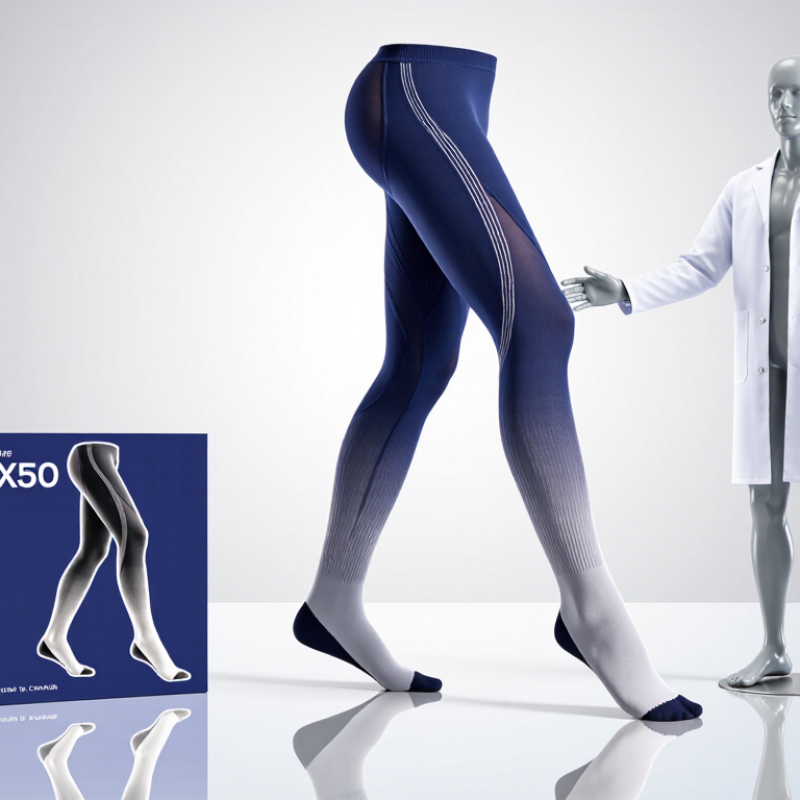
China top compression stockings are high-quality hosiery made in China for supporting blood flow in the legs. They are not ordinary tight socks. Their pressure is usually strongest at the ankle and gradually decreases toward the calf or thigh. This graduated design can help blood move upward against gravity.
Many people wear them during long flights, standing shifts, recovery periods, or exercise. A properly fitted pair may reduce ankle swelling, leg heaviness, and tired sensations. The fabric should feel firm but not painful. Look for a clearly stated compression level, measured in mmHg, along with breathable yarn and smooth seams. Reliable manufacturers should provide size charts, material details, and quality testing information.
Fit matters more than appearance. A stocking that rolls down can create pressure bands and discomfort. One that is too loose may offer little support.
In practice, measuring the ankle and calf in the morning often gives a better result, when swelling is lower. However, compression stockings do not suit every circulation problem.
People with suspected arterial disease, unexplained leg pain, skin damage, or diabetes-related complications should ask a qualified healthcare professional first. Even well-made stockings are not a complete treatment. A small fitting mistake can change the whole experience.
They are supportive hosiery designed to improve upward blood movement in the legs. Pressure is strongest at the ankle. It gradually decreases toward the calf or thigh. They are not ordinary tight socks.
They may reduce ankle swelling, leg heaviness, and tired sensations. People often wear them during flights, standing shifts, recovery periods, or exercise. Results vary between individuals.
Graduated pressure gently narrows some superficial veins. This encourages blood to move toward the heart. A review of airline passengers found less leg swelling among stocking users. The evidence was not completely certain.
Gentle compression, often 15–20 mmHg, may suit tired legs or mild swelling. Levels around 20–30 mmHg may suit stronger venous symptoms. Stronger is not automatically better. A healthcare professional should guide higher levels.
Measure your ankle and calf early in the morning. Swelling is usually lower then. Some stockings also need thigh and leg-length measurements. Follow the garment’s chart, not your normal sock size.
They should feel firm, smooth, and supportive. They should not cause pain, numb toes, cold feet, or deep marks. Check your skin after removal. Persistent redness needs medical advice.
Put them on before prolonged standing. Turn the upper section inside out first. Place the heel correctly, then smooth the fabric upward. Do not pull only from the top. Small mistakes matter.
People with suspected arterial disease, unexplained leg pain, damaged skin, or diabetes-related complications should ask first. Compression is supportive equipment, not a complete treatment. I would not assume every medical-grade stocking works equally well.
China top compression stockings are designed to apply graduated pressure, with the strongest support around the ankles and gradually less pressure higher up the legs. This structure helps guide blood back toward the heart and may reduce the effects of prolonged sitting, standing, travel, or limited movement. Understanding how compression stockings benefit circulation can help users choose supportive legwear for everyday comfort and circulation management.
Potential benefits include reducing leg swelling, tiredness, heaviness, and discomfort, while also helping support healthy venous blood flow. The correct compression level and size are important: users should consider their needs, measurements, comfort, and professional advice when necessary. Stockings should fit smoothly without painful tightness, bunching, or numbness. They are generally easier to put on in the morning, before significant swelling develops. Regular washing according to the care instructions, careful handling, and checking for signs of wear can help maintain their elasticity and performance.

 Seaoriva Medical