Walking is often treated as a simple daily action, yet it depends on balance, muscle strength, vision, confidence, and a safe environment. For many patients, a cane, crutch, rollator, or walking frame can turn an uncertain step into a controlled movement. How walking aids improve patient mobility is therefore not only a question of equipment. It concerns correct assessment, personal fitting, practical training, and regular review.
The World Health Organization’s Global Report on Assistive Technology estimates that more than 2.5 billion people need at least one assistive product worldwide. This figure may exceed 3.5 billion by 2050. Walking aids are part of this growing need, especially among older adults and people recovering from surgery, stroke, fractures, or neurological conditions. The Centers for Disease Control and Prevention reports that one in four adults aged 65 years and older falls each year. A properly selected aid may improve stability, conserve energy, and support safer transfers between a bed, chair, and bathroom.
Fit matters greatly. A handle positioned too high can elevate the shoulder. A poorly adjusted frame may shorten the patient’s stride. Small errors become visible on a wet hospital floor. Evidence is not perfectly uniform, however. Benefits vary with diagnosis, cognition, home layout, and adherence to training. An aid can support independence, but it cannot replace clinical judgment.
Occupational therapists and physiotherapists should observe real movement, not only seated strength. They should check turning, stair use, footwear, and fatigue. Patients also need clear instructions and confidence-building practice. Better mobility is rarely created by the device alone. It develops through a careful partnership between the patient, clinician, caregiver, and environment.
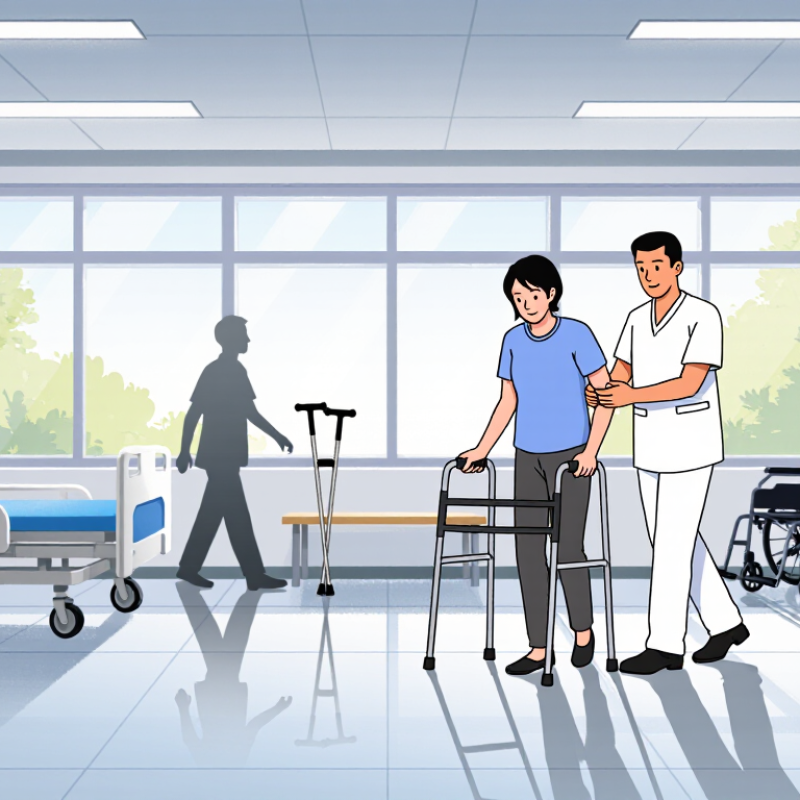
Walking aids are devices that support balance, strength, or weight-bearing during movement. Canes offer light support on one side. Crutches can reduce pressure on an injured leg. Walkers provide a wider base, while wheeled walkers help some patients move more smoothly. Each device changes how the body shares weight.
Patient mobility matters beyond walking speed. It supports independence, safer transfers, daily routines, and social contact. A short walk to the kitchen can preserve confidence. Reaching the bathroom without rushing may reduce fall risk. Limited movement can also weaken muscles and increase stiffness. Small changes can matter.
In rehabilitation practice, a physiotherapist should match the aid to the patient’s strength, balance, pain, and home layout. Fit matters. A handle placed too high can strain the shoulder. A device used too far ahead may increase instability. Patients also need clear practice with turning, stairs, uneven ground, and sitting down. A walking aid is not a perfect fix. Even careful advice can miss fatigue, fear, or poor lighting at home. Regular review helps, especially after surgery, illness, or a fall. Patients should report new pain, numbness, dizziness, or repeated difficulty using the device.
2026 How Walking Aids Improve Patient Mobility?
How Different Walking Aids Support Movement and Balance
Walking aids can turn an uncertain step into a controlled movement. A cane offers light support for people with mild weakness or balance concerns. It should usually stay opposite the weaker leg. This small detail can reduce strain and improve rhythm. A poorly fitted cane, however, may create shoulder tension or encourage leaning.
Crutches provide stronger support when one leg needs limited weight bearing. They require coordination, arm strength, and careful placement. The hand grips should support the body, not the armpits. A walker gives the widest base of support, which can help patients with reduced balance or lower-limb weakness. Moving it too far ahead is a common mistake. It can pull the body forward and increase fall risk.
Wheeled walkers allow smoother movement over longer distances. Their seats may offer rest, but sitting down still requires controlled braking and stable positioning. In clinical practice, therapists assess posture, step pattern, home surfaces, and fatigue before recommending an aid. The safest device is not always the most supportive one. Too much support may reduce natural movement and confidence. Regular reassessment matters because strength, pain, and balance can change. A patient may also use an aid correctly in therapy but struggle beside a wet bathroom floor. Safe progress needs practice in real situations.
2026 How Walking Aids Improve Patient Mobility?
Choosing a walking aid should begin with the patient, not the equipment. A trained clinician should observe walking speed, balance, posture, joint pain, muscle strength, and coordination. The patient’s diagnosis also matters. Someone recovering from surgery may need different support than someone with long-term neurological weakness.
Ask about daily goals. Does the patient need help reaching the bathroom, walking outdoors, or climbing stairs? Check the home environment for loose rugs, narrow spaces, poor lighting, and uneven flooring. A patient may appear stable in a clinic but struggle beside a kitchen counter. That difference matters.
Try the aid during realistic movements. Watch the patient stand, turn, sit, and carry a light object. Check handle height, grip comfort, weight, and walking rhythm. The aid should support movement without creating new strain in the wrists, shoulders, or back. Training is essential. Poor technique can increase fall risk.
I once underestimated how quickly fatigue could change a patient’s gait. A short trial was not enough. Reassessment after several minutes, or after a few days of use, may reveal problems missed initially. There is no perfect checklist. Patient confidence, fear, vision, and memory can also affect safe use. Any major change in balance, pain, or walking ability should prompt professional review.
These commonly used screening thresholds help identify patients who may need a detailed gait, balance, strength, and environmental assessment before selecting a walking aid. A Timed Up and Go result of 12 seconds or more, gait speed below 0.8 m/s, a five-times-sit-to-stand time above 15 seconds, or inability to maintain tandem stance for 10 seconds may indicate increased mobility or fall-risk concerns.
The results are screening prompts rather than automatic prescriptions. The final choice between a cane, crutches, or a walker should also consider weight-bearing restrictions, upper-limb strength, coordination, cognition, pain, home layout, and the patient’s ability to use the device safely.
Reference thresholds are commonly used in geriatric mobility and fall-risk screening, including CDC STEADI-based assessments.
Learning to use walking aids safely starts with an individual assessment. A licensed physiotherapist checks balance, leg strength, joint movement, vision, and home risks. The aid must match the patient’s height and walking pattern. With a walker, handles usually sit near the wrist crease when arms rest naturally. For one-sided weakness, a cane is usually held opposite the weaker leg. Poor fitting causes trouble.
Training works best beside real tasks, not only in a clinic corridor. Patients practice standing, turning, sitting, and crossing a doorway. They learn to move the aid first, then step with steady breathing. On stairs, a therapist teaches a consistent sequence and guards against sudden imbalance. Rubber tips also need checking. Loose tips can slide on wet tiles. A family member should watch quietly and avoid pulling the patient forward. It happens often.
Confidence develops through repetition, but progress is rarely smooth. A patient may walk well in the morning and tire by afternoon. Fatigue can shorten steps and increase fall risk, so rest belongs in the plan. Clinicians often see patients focus on foot placement and miss a curled rug. That detail deserves attention. Patients should report dizziness, new pain, numbness, or repeated near-falls promptly. The plan may need adjustment, even when the aid seems familiar.
2026 How Walking Aids Improve Patient Mobility?
Walking aids can turn uncertain steps into controlled movement. A cane may support balance, while a walker can widen the base of support. Crutches may reduce weight on an injured leg during recovery. The right device depends on strength, coordination, pain, vision, and home conditions. Fit matters. A handle that sits too high can raise the shoulder and strain the wrist.
Independence grows when patients can reach the bathroom, prepare meals, or attend appointments safely. Proper training is essential. A physical therapist can adjust height, teach turning techniques, and check whether the user loads the aid correctly. Small details matter. Rubber tips need inspection, and loose rugs should be removed from walking paths. Good lighting also reduces hesitation during nighttime movement.
Walking aids do not remove every fall risk. In some cases, an unsuitable device may create new hazards. A walker used too far ahead can pull the body forward. A cane held on the weaker side may provide less effective support. These mistakes are common, and they deserve patient review rather than blame. Clinical decisions should be reassessed after surgery, medication changes, dizziness, or declining strength. A short follow-up can reveal problems that remain invisible during a single fitting.
A cane offers light support for mild weakness or balance concerns. It usually stays opposite the weaker leg. This can improve rhythm and reduce strain. Fit matters. A poor height may cause shoulder tension or leaning.
Crutches can reduce weight on one leg during recovery. They require arm strength, coordination, and careful placement. The hand grips should support the body. Never rest body weight on the armpits. That mistake can cause discomfort and poor control.
A walker provides a wide base of support. It may help people with reduced balance or lower-limb weakness. Move it only a reasonable distance ahead. Pushing it too far can pull the body forward. That increases fall risk.
Wheeled walkers can make longer walks smoother. Some include seats for short rests. The brakes must engage before sitting. Position the device steadily first. A seat is not automatically safe.
Selection should begin with the patient, not the equipment. A trained clinician should assess strength, posture, pain, balance, and coordination. Daily goals also matter. Bathroom access differs from outdoor walking. The best-supported device is not always the best choice.
Check loose rugs, narrow spaces, poor lighting, and uneven floors. Wet bathroom surfaces need special attention. A person may walk well in a clinic but struggle beside a kitchen counter. Real homes reveal hidden problems. That detail is easy to miss.
Properly fitted aids may help people reach bathrooms, prepare meals, and attend appointments. Training can improve turning, standing, and loading technique. Good lighting may reduce hesitation at night. Inspect rubber tips regularly. Small details matter.
Strength, pain, balance, vision, and fatigue can change over time. Medication changes or dizziness may also affect safe walking. A short trial may hide problems. I once underestimated fatigue during a walking assessment. Several minutes later, the gait changed. Review is necessary.
How walking aids improve patient mobility begins with understanding how devices such as canes, crutches, walkers, and rollators support balance, posture, and controlled movement. They can help patients distribute weight, reduce strain on weak or painful areas, and move with greater stability during daily activities. Because every patient has different strengths, limitations, and recovery goals, selecting an aid should involve assessing balance, muscle control, walking ability, coordination, home surroundings, and the level of support required.
Patients also need clear instruction and practice to use walking aids safely and effectively. Learning the correct height adjustment, hand placement, stepping pattern, turning technique, and methods for managing stairs or uneven surfaces can improve confidence and reduce the risk of falls. When properly selected and used, walking aids promote independence by making essential tasks easier, encouraging safe activity, and helping patients participate more fully in rehabilitation and everyday life.

Seaoriva Medical