How to organize prescription medication storage systems is a practical safety question, not merely a housekeeping task. A crowded kitchen drawer can hide expired tablets, duplicate prescriptions, or instructions that no longer match the patient’s needs. A safer system creates visibility, separation, and routine review. It should work during busy mornings, illness, travel, and moments of confusion.
Medication-safety expert Michael R. Cohen, PharmD, founder of the Institute for Safe Medication Practices, has said, “Medication errors are not caused by bad people; they are caused by bad systems.” That principle gives this topic real direction. Store medicines in their original, labeled containers whenever possible. Use clearly marked sections for each household member. Keep look-alike products apart. Place daily medicines where they are easy to find, but away from children, visitors, moisture, and excessive heat. A locked container may be appropriate when access must be limited.
Make the system visible.
A written medication list can sit beside the storage area, including medicine names, doses, schedules, and prescriber details. A weekly organizer may help some adults, but it can also remove labels and create confusion. That weakness deserves attention. Ask a pharmacist before transferring medicines, combining products, or changing storage conditions. Check dates and appearance regularly, but do not rely on appearance alone. Some medicines remain usable while others require special handling. The following guide explains how to build a storage system that is orderly, realistic, and easier to maintain. Perfect organization is unlikely. Consistent review matters more.
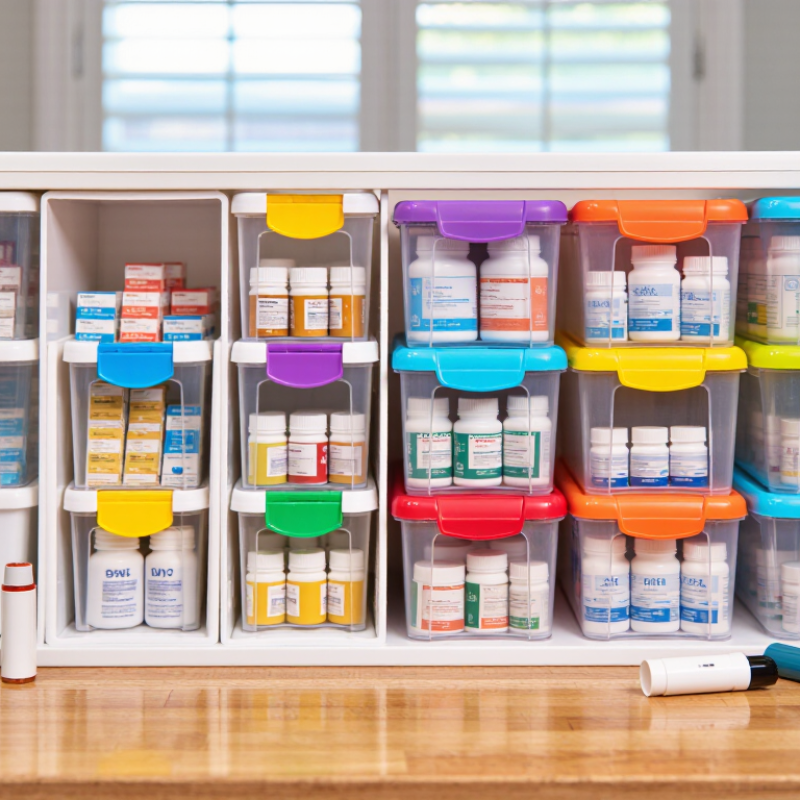
Assessing prescription medication storage needs begins with the people using the medicine. Note each person’s age, memory, mobility, dosing schedule, and ability to read labels. A child, an older adult, and a visiting caregiver may face very different risks.
Ask practical questions:
The storage area also deserves close inspection. Look for heat, sunlight, moisture, loose pills, and expired containers. A bathroom cabinet may seem convenient, but steam can damage some medicines. A kitchen shelf may expose them to heat. Keep medicines in their original, clearly labeled containers unless a pharmacist recommends another system. Separate different users and dosing times. Use a written inventory with medicine names, directions, refill dates, and storage instructions. Keep it updated.
A locked area may reduce access risks, but it must remain practical for the authorized user. Overly complicated systems can cause missed doses. That is easy to overlook. Review the setup after a dosage change, hospital visit, move, or new caregiver. A neat drawer can still hide confusion. No system is perfect, and convenience can conflict with safety. When storage instructions seem unclear, consult a pharmacist or prescribing clinician rather than guessing. Their guidance should shape decisions about temperature, light, moisture, and safe disposal.
How to Organize Prescription Medication Storage Systems
Choose a secure, suitable location before buying containers. The CDC reports that six in ten U.S. adults live with a chronic disease. Many households therefore manage several prescriptions daily. A locked, high cabinet can reduce accidental access. Choose a dry hallway or bedroom cabinet, away from windows, heaters, and sinks. Avoid bathrooms. Steam and temperature changes can damage medications.
The U.S. Food and Drug Administration advises storing medicines according to each label’s instructions. USP General Chapter <659> defines controlled room temperature as 20–25°C for applicable products. A small indoor thermometer can reveal unsafe heat that feels normal. Keep original labels attached, and separate each person’s medication in clearly marked sections. Refrigeration is suitable only when specifically instructed. Never improvise with the refrigerator door.
In practice, the best location balances security and daily access. An excessively hidden cabinet may encourage missed doses. That is a real weakness. I would review the storage area whenever a prescription changes, especially after moving or renovating. Keep a written inventory nearby, but not attached to the cabinet door. Check expiry dates monthly, and ask a pharmacist about damaged, discolored, or unusually warm medication. The system may look organized while still failing during a rushed morning. A short trial can expose that problem.
Choose a secure and suitable storage location by matching the storage area to the labeled temperature range.
Controlled room temperature is typically 20–25°C, refrigerated storage is 2–8°C, cool storage is 8–15°C, and freezer storage is −25 to −10°C. Keep medicines in their original labeled containers, away from heat, moisture, and direct sunlight. Use a locked, access-controlled cabinet when needed, and always follow the medication label or pharmacist’s instructions.
A reliable prescription medication storage system begins with three labels: use, schedule, and expiration date. The World Health Organization’s Adherence to Long-Term Therapies report estimates that adherence averages only 50% in developed countries. A crowded drawer can quietly worsen that problem. Keep daily medicines in a clearly marked, easy-to-reach section. Separate pain relief, heart medicines, diabetes treatments, and other categories. Do not combine loose tablets. Keep each medicine in its original labeled container when possible.
Sort by schedule next. Place morning doses apart from evening doses. Use a seven-day organizer only after checking compatibility with a pharmacist. Some medicines need original packaging or special protection from light and moisture. The U.S. Food and Drug Administration advises following each label’s storage instructions, rather than assuming every medicine belongs in a bathroom cabinet. A cool, dry cupboard is often better. Never store medicines beside a sink, heater, or sunny window. I once treated “out of sight” as “safe,” but that made refills harder to notice.
Review expiration dates monthly. Put the earliest date at the front, and mark it with a removable note. The FDA explains that expiration dates are based on stability testing under labeled conditions. Do not use medicine past that date without professional advice. Return unwanted medicines through an authorized take-back option. Keep an updated list with dose, schedule, and prescriber. My system still needs improvement: color labels help, but poor lighting can defeat them. A small checklist near the cabinet catches forgotten changes.
A reliable medication system starts with clear labels and one consistent storage location.
Keep medicines in their original containers whenever possible. These containers show the prescription name, strength, directions, and expiration information. Store them in a cool, dry place away from bathrooms, kitchen heat, and direct sunlight. Use a locked container when children or visitors may reach them.
Label shelves or compartments by person, not only by medication type. Add a simple card showing the medicine name, dose, timing, and prescribing clinic. Avoid rewriting instructions from memory. Compare the card with the pharmacy label and ask a pharmacist about unclear directions.
A weekly tracker can record each dose, missed dose, refill date, and remaining quantity. Keep it visible, but protect personal information.
Refilling works better when it follows a fixed routine. Check supplies on the same day each week. Count remaining doses and request refills before the supply becomes urgent. Record the request date and expected pickup or delivery date.
My first system used too many categories and became difficult to maintain. Simpler worked better. Still, missed updates can happen. Review the tracker during appointments, especially after a dose change or new prescription.
Remove expired or discontinued medicines only through approved disposal guidance, rather than placing them casually in household waste.
A safe storage system begins with the conditions listed on each medicine’s label. Most prescriptions need a cool, dry place away from direct sunlight. The bathroom cabinet often seems convenient, but shower heat and moisture can damage medicines. A high cupboard or locked drawer may work better. Keep medicines in their original, clearly labeled containers. This helps prevent mix-ups and preserves important instructions. A simple weekly check can reveal expired products, damaged packaging, or medicines that no longer belong in the home.
Keep children, visitors, and pets in mind. A lockable container adds protection, especially when several people share the household. Store liquid medicines upright, and avoid moving tablets into unmarked bags. I sometimes find storage systems become too complicated, which creates new mistakes. A plain system that everyone understands is usually safer. Ask a pharmacist about medicines needing refrigeration, and never freeze a product unless its instructions allow it.
Dispose of unneeded medicines through an authorized take-back service, pharmacy collection point, or local waste program when available. Read the label and local guidance carefully, because disposal instructions can differ. Do not flush medicine or pour it into a sink unless official instructions specifically permit it. Remove personal details from packaging when possible, while keeping the medicine identifiable for safe handling. Do not share unused prescriptions. They may appear suitable but can cause serious harm without professional assessment. Even a small leftover supply deserves review.
Use a locked, high cabinet in a dry hallway or bedroom. Keep it away from windows, heaters, sinks, and steam. Avoid bathrooms.
Original containers preserve labels, directions, and expiration dates. They also reduce mix-ups between household members. Do not combine loose tablets.
Refrigerate medicine only when its label specifically requires it. Do not use the refrigerator door without professional guidance. Cold storage is not always suitable.
For applicable medicines, controlled room temperature is usually 20–25°C. A small indoor thermometer can reveal unsafe heat. The room may feel comfortable but still be too warm.
Separate morning and evening doses in clearly marked sections. Keep daily medicines easy to reach, but still secured. A crowded drawer creates confusion.
Ask a pharmacist before transferring medicines into an organizer. Some medicines need original packaging or protection from light and moisture. Convenience can create problems.
Review expiration dates monthly. Place the earliest date at the front and mark it with a removable note. Do not use expired medicine without professional advice.
Separate it from usable medicine and ask a pharmacist for guidance. Do not guess based on appearance alone. Use an authorized medicine take-back option for unwanted doses.
Update a written list with the medicine, dose, schedule, and prescriber. Review the cabinet after every prescription change. My own system might still fail during a rushed morning. A short trial can expose that weakness.
How to organize prescription medication storage systems begins with assessing the household’s medication needs, safety risks, and daily routines. Choose a secure, dry, and suitable location away from children, pets, heat, moisture, and direct sunlight. Medicines should remain in their original containers whenever possible, with labels easy to read and instructions available for reference. Separate medications by purpose, dosing schedule, and expiration date to reduce confusion and support consistent use.
A simple tracking system can record remaining quantities, refill dates, and changes in treatment instructions. Regularly review storage conditions and check for damaged, expired, or unnecessary medicines. Unneeded medications should be disposed of through approved local collection or pharmacy-based programs rather than being shared or discarded carelessly. A well-organized system improves visibility, reduces mistakes, supports adherence, and helps ensure that prescription medicines remain safe and effective when needed.

Seaoriva Medical