Top Ways to Keep Rehabilitation Centers Clean

Time:2026-11-12 Author:Oliver
0%

Clean rehabilitation spaces support safety, dignity, and recovery. In a shared therapy room, sweat on a mat, dust beneath a chair, or residue on a handrail can quickly become part of the daily environment. “How to maintain cleanliness in rehabilitation centers” is therefore more than a housekeeping question. It involves clear routines, trained staff, suitable products, and careful attention to high-touch surfaces. Small details matter. So does consistency.

Dr. William A. Rutala, an infection-prevention specialist, has emphasized a foundational rule: “Cleaning is the necessary first step of any disinfection process.” That principle helps shape practical routines for treatment rooms, bathrooms, dining areas, and shared equipment. Staff can follow written schedules, clean items between users, and check that surfaces remain visibly clean and dry. Product directions and facility infection-control guidance should always guide the work. A checklist helps, but it cannot replace observation. Look closely at door handles, therapy bands, and the edges of sinks. Some corners get missed. That deserves reflection, not blame. A useful cleanliness plan also gives staff a simple way to report spills, supply shortages, or recurring problems. This introduction explores ways to build those habits into everyday care, while keeping the environment welcoming rather than clinical or harsh.
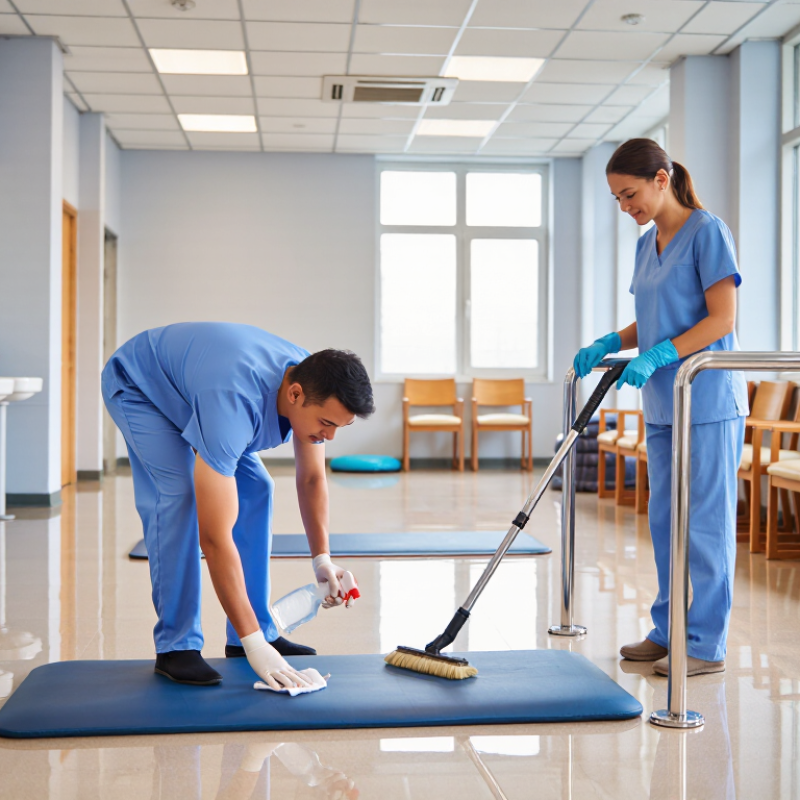
Top Ways to Keep Rehabilitation Centers Clean

Assessing Cleaning Needs and Infection Risks

Assess cleaning needs by mapping each rehabilitation activity, not just each room. A therapy gym may have parallel bars, gait belts, mats, and handrails touched by many people within an hour. Patient rooms add bed rails, call buttons, toilets, and wound-care surfaces. Risk also varies: a person receiving wound care or using shared respiratory equipment may need different precautions from someone attending a mobility session. Traffic, visible soil, patient vulnerability, and equipment-sharing frequency should shape cleaning schedules. The details matter.

CDC reports that about 1 in 31 hospital patients has at least one healthcare-associated infection on any given day. This broad hospital estimate is not a rehabilitation-center rate, but it underlines why routine surfaces deserve attention. Teams can use a simple risk map and direct observation to identify missed touchpoints, then check whether staff follow required product contact times. Watch a busy shift. Paper schedules can miss real use. Ask staff where cleaning slows down, and review incident or infection data without assuming every infection came from the environment. Some gaps are uncomfortable to find. That is useful information, not a reason to hide them.

Infection Burden Highlights the Need for Risk-Based Cleaning

CDC estimates indicate that healthcare-associated infections affect patients and residents in healthcare settings. These figures provide context for prioritizing cleaning in rehabilitation centers, especially in shared and high-touch areas.

Note: Estimates are approximately 3.2% (1 in 31) of hospital patients and 2.3% (1 in 43) of nursing home residents on a given day. They come from different surveillance snapshots, are not directly comparable, and are not specific to rehabilitation centers. Sources: CDC, healthcare-associated infection estimates and nursing home infection data.

Establishing Routine Cleaning and Disinfection Procedures

A reliable cleaning routine starts with a written schedule tied to each space’s use. In resident rooms, staff can clean bed rails, call buttons, door handles, and bathroom taps at set intervals and whenever visibly soiled. Therapy areas need their own checklist: wipe treatment tables and shared equipment between users, and clean floors after spills. CDC guidance recommends choosing environmental cleaning frequency according to contamination risk and how often surfaces are touched. That makes high-touch surfaces a priority, not an afterthought.

WHO’s 2022 global report estimates that about 7 in 100 patients in high-income acute-care hospitals acquire at least one health care-associated infection; estimates are higher in lower-resource settings. These figures are not specific to rehabilitation centers, but they show why consistent practices matter. Staff should follow disinfectant label directions for dilution and wet contact time, using a timer when needed. Keep clean cloths separate from used ones, and record completed tasks so missed rooms are visible during handoff. No checklist is perfect. A schedule may look complete on paper while a busy shift leaves a therapy mat untouched; supervisors should review logs and observe work, then adjust routines when gaps recur.

Top Ways to Keep Rehabilitation Centers Clean - Establishing Routine Cleaning and Disinfection Procedures

Area or Item Routine Suggested Frequency Cleaning and Disinfection Procedure Key Control
Shared therapy equipment
(for example, exercise mats, weights, and mobility aids)
Remove visible soil, then disinfect surfaces touched during use. Between users; additionally whenever visibly soiled. Use a facility-approved disinfectant compatible with the equipment. Keep the surface visibly wet for the contact time on the product label. Follow the equipment manufacturer’s care instructions and allow items to dry before reuse when required.
High-touch surfaces
(such as door handles, handrails, switches, and counters)
Clean and disinfect frequently touched surfaces. At least daily, and more often when use or contamination risk is high. Use a compatible, facility-approved product according to its label directions. Include high-touch points on a written checklist and record completed tasks.
Treatment and examination areas Clean and disinfect the treatment surface and nearby frequently touched items. Between patients or users, and when visibly soiled. Remove soil first when present, then apply the appropriate disinfectant for the full label contact time. Prepare the area before the next person enters; use clean supplies for each area.
Restrooms Clean and disinfect sinks, faucets, toilet surfaces, dispensers, and other high-touch points. At least daily; inspect and service more frequently based on use. Use products suitable for the surface and task. Clean visibly soiled areas promptly. Keep hand soap and paper towels stocked; document checks and cleaning.
Floors and general surfaces Remove dust and debris, then clean floors and other surfaces as needed. Daily in regularly used areas; promptly when spills or visible soil occur. Use a cleaning method and product appropriate for the surface. Disinfect only when indicated by the facility’s risk-based procedure. Use wet-floor signs where needed and keep clean and used supplies separate.
Linens and reusable fabric items Replace used items and handle soiled laundry with minimal agitation. After each user or whenever items are wet or visibly soiled. Launder using the facility’s designated process and the textile care instructions. Store clean linens separately from used laundry; do not place used items on clean surfaces.
Blood or body-fluid spills Restrict access, absorb the spill, then clean and disinfect the affected area. Immediately, following the facility’s exposure-control procedure. Wear appropriate personal protective equipment and use a disinfectant labeled for the situation. Follow the specified contact time. Dispose of contaminated materials safely and perform hand hygiene after removing gloves.

Routine reminder: Train staff on assigned cleaning tasks, hand hygiene, personal protective equipment, and product directions. Follow applicable local requirements, facility policies, and manufacturer instructions.

Maintaining Shared Equipment and High-Touch Surfaces

Top Ways to Keep Rehabilitation Centers Clean
Maintaining Shared Equipment and High-Touch Surfaces

Shared therapy equipment moves between people throughout the day. Wipe handles, adjustment knobs, chair arms, and control panels between users, following the disinfectant’s labeled contact time. A surface that looks dry may still need to stay visibly wet for several minutes. Check equipment instructions before cleaning; some products can damage vinyl, screens, or foam grips. Keep clean and used items in separate, clearly marked areas.

Tips: Assign staff responsibility for specific rooms or equipment. Use a simple checklist for therapy tables, walkers, exercise bands, and door handles. Replace cloths when soiled, and never dip a used cloth back into clean solution. Keep supplies close to the point of use.

Pay extra attention to touchpoints near sinks, reception desks, and shared treatment stations. Staff should clean their hands before handling disinfected equipment, then avoid placing it on an unclean counter. Record completed cleaning when a log is part of the center’s routine. Logs help reveal gaps, but they cannot prove every surface was cleaned well. A forgotten switch happens; reviewing routines and adjusting them is part of maintaining a safer space.

Managing Laundry, Waste, and Personal Protective Equipment

Rehabilitation centers handle sheets, gowns, continence products, and therapy-room waste every day. Small lapses can spread contamination: a damp linen bag left beside a clean supply cart is an avoidable risk. The CDC advises handling soiled textiles as little as possible and bagging them where they are used. Keep clean and used linen on separate, clearly marked carts, and never place clean bundles on floors or wet surfaces. Workflows matter.

Waste sorting also deserves attention. The World Health Organization estimates that about 85% of healthcare waste is general, non-hazardous waste, while 15% is hazardous (WHO, Health-care Waste, 2024). That split is a useful reminder: putting everything into a regulated waste stream is not automatically safer. Train staff to sort waste at the point of use, using clearly labeled containers, and check bins during busy shifts. For PPE, follow CDC Standard Precautions: select gloves, gowns, masks, or eye protection based on the task and expected exposure. Remove PPE carefully, then perform hand hygiene.

Tips: Keep spare linen bags and PPE near care areas, but away from clean supplies. Assign a staff member to check cart separation and bin labels each shift. No system is perfect. A rushed handoff can undo a good routine, so review near-misses without blame and adjust the workflow.

Training Staff and Monitoring Sanitation Standards

Clean rehabilitation centers depend on staff who understand both the routine and the reason behind it. Training should show how to clean high-touch surfaces, such as bed rails, therapy equipment handles, and bathroom grab bars. Demonstrations work better than a handout alone. Ask staff to show each step, including the correct contact time for disinfectants and when gloves should be changed. Small details matter.

Refresh training when procedures change, after an observed gap, and during regular team check-ins. Keep instructions specific to each area; a therapy gym may need a different cleaning schedule than a shared dining space. Supervisors can review dated cleaning logs and inspect a few surfaces during each shift. A checklist can look complete while a corner remains dusty. That gap deserves a calm conversation, not blame. Staff should know how to report missing supplies or a spill without delaying care.

Tips: Use a short skills check, not just sign-in sheets. Mark completed tasks at the time of cleaning, and have a supervisor verify selected entries. If the same issue returns, revisit the training and ask staff what makes the task difficult. A perfect record is not proof of a perfect room.

FAQS

How should a rehabilitation center identify cleaning priorities?

Map activities and shared touchpoints, not rooms alone. Note traffic, visible soil, patient vulnerability, and equipment use. Details matter.

What do infection estimates tell rehabilitation teams?

One broad hospital estimate reports that about 1 in 31 patients has a healthcare-associated infection on a given day. It is not a rehabilitation-center rate. That distinction matters.

Which surfaces need regular attention?

Check bed rails, call buttons, bathroom taps, and grab bars. In therapy areas, include table surfaces, equipment handles, mats, and handrails.

When should shared therapy equipment be cleaned?

Clean shared equipment between users, and clean floors after spills. A busy schedule can leave a mat untouched, so observe actual use.

How should staff use disinfectants?

Follow label directions for dilution and wet contact time. Use a timer when needed. Keep clean cloths apart from used ones.

How can supervisors check whether cleaning tasks are completed?

Review dated logs and inspect selected surfaces during each shift. Paperwork can look complete while a dusty corner remains.

What should cleaning training include?

Demonstrate how to clean high-touch surfaces and use products correctly. Ask staff to show each step, including when to change gloves.

How should teams respond when the same cleaning gap returns?

Discuss the obstacle calmly, check whether supplies or procedures are causing delays, and refresh training. A perfect record proves little.

Conclusion

How to maintain cleanliness in rehabilitation centers begins with understanding the needs of each space and the infection risks associated with its activities. A clear cleaning schedule should set out how often rooms, treatment areas, bathrooms, and common spaces are cleaned and disinfected. Staff should give particular attention to shared equipment and high-touch surfaces, using suitable procedures between users and checking that items are ready for safe use.

Cleanliness also depends on careful handling of laundry, waste, and personal protective equipment. Keeping these tasks organized helps limit cross-contamination and supports a tidy environment. Regular staff training ensures that cleaning steps are understood and followed consistently, while routine inspections and sanitation checks can identify gaps early. By combining risk-based planning, dependable daily procedures, and ongoing monitoring, rehabilitation centers can create a cleaner, more comfortable setting for patients, staff, and visitors.

Oliver

Oliver

Oliver is a seasoned marketing professional with a wealth of expertise in driving brand awareness and engagement. With a deep understanding of our company's product offerings, he consistently delivers high-quality content that enriches our professional blog. His insights not only shed light on......